Voice search is no longer just asking a smart speaker for the weather. Its voice is layered into phones, cars, TVs, apps, and now AI assistants. So the SEO question in 2026 isn’t whether we should do voice SEO.
It’s where voice shows up in your customer journey and what you need to change to win those moments.
Below are the most useful stats, grouped by theme, plus segmentation by device, country, language, and gender.
1: Adoption and where voice happens
Mobile still dominates voice behavior. GlobalWebIndex found that 37% of internet users used voice search or voice commands in the past month on any device, and 27% did it on mobile (vs 13% on PC/laptop and 5% on tablet).
Google’s own data has supported the trend for years: back in 2016, Google reported 20% of searches in the Google App were voice. The exact share today varies by market and device, but the direction is clear: voice is normal.
Smart speakers are still a meaningful layer, but not the whole story. In the same GWI dataset, 17% of internet users owned a voice-controlled smart speaker, while 34% said they were planning to purchase one.
Market growth in 2026 is being pulled by the device ecosystem. For example, Fortune Business Insights projects the global smart speaker market at $16.61B in 2026 (up from $15.10B in 2025).
What this really means is: if your “voice SEO plan” is only about Alexa skills, you’re missing the bigger opportunity. Most voice queries happen on phones, and they flow into Google Search, Maps, and local results.
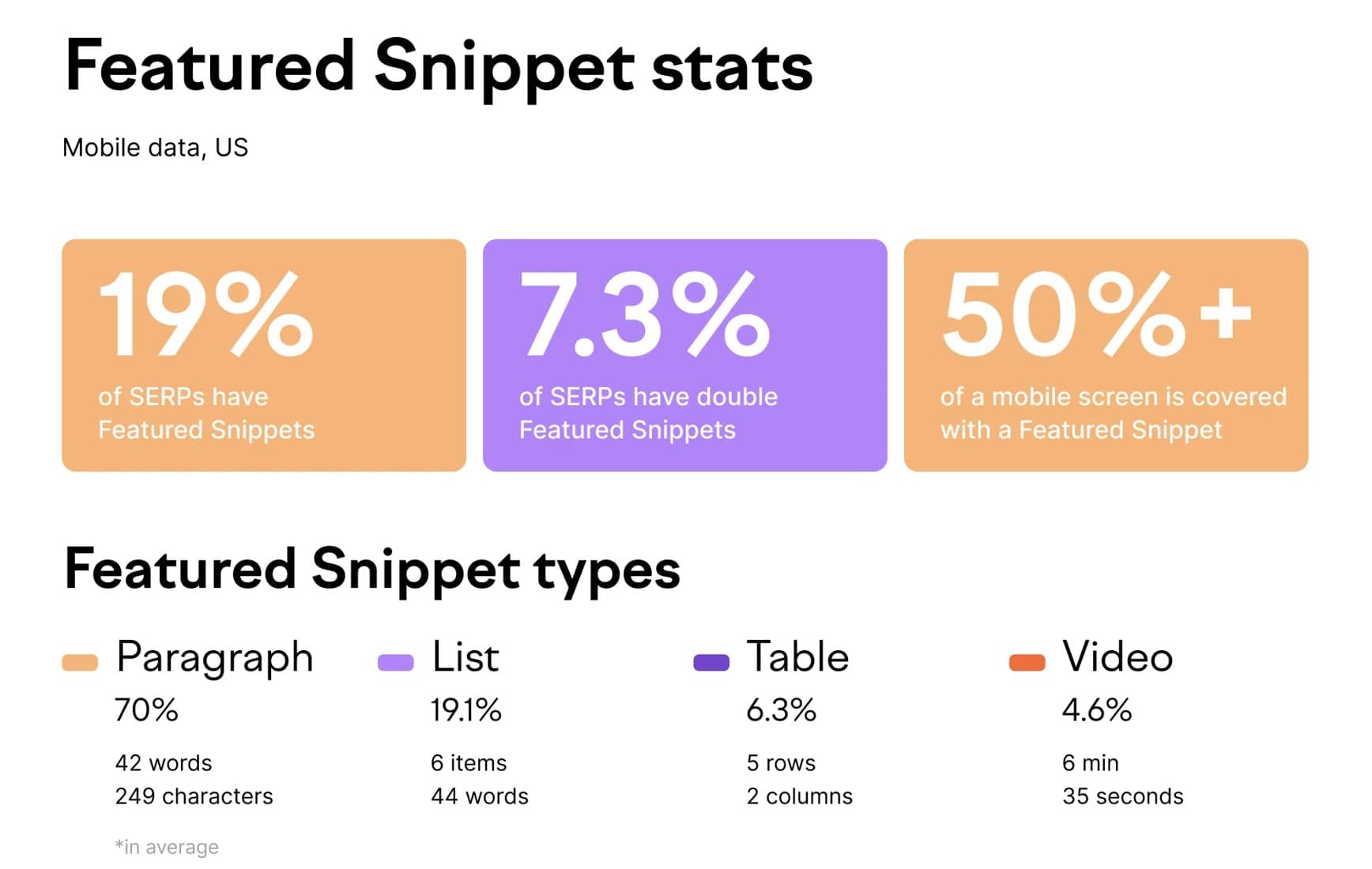
Voice queries tend to want one clean answer, fast.
Backlinko’s voice search study (10,000 results) found:
- Average voice result page load time: 4.6 seconds
- Typical voice answer length: ~29 words
- 70.4% of Google Home results were HTTPS
The practical takeaway: voice SEO is “featured snippet SEO + performance SEO + local SEO.”
3: Device segmentation (how users access voice)
There isn’t one universally accepted 2026 global device share dataset for “voice search” specifically. But we do have solid directional evidence from GlobalWebIndex showing mobile leads voice usage.
Top Assistants: Google Assistant (36%) and Apple Siri (36%) lead in usage, followed by Amazon Alexa (25%).
Here’s a useful segmentation model for SEO planning in 2026:
1) Smartphones (highest impact)
- Approximately 27% of people use voice search on their mobile devices.
- Primary voice interface for search, maps, and “near me” intent.
- Best wins: local landing pages, GBP optimization, FAQ blocks, fast pages.
2) Cars (rising)
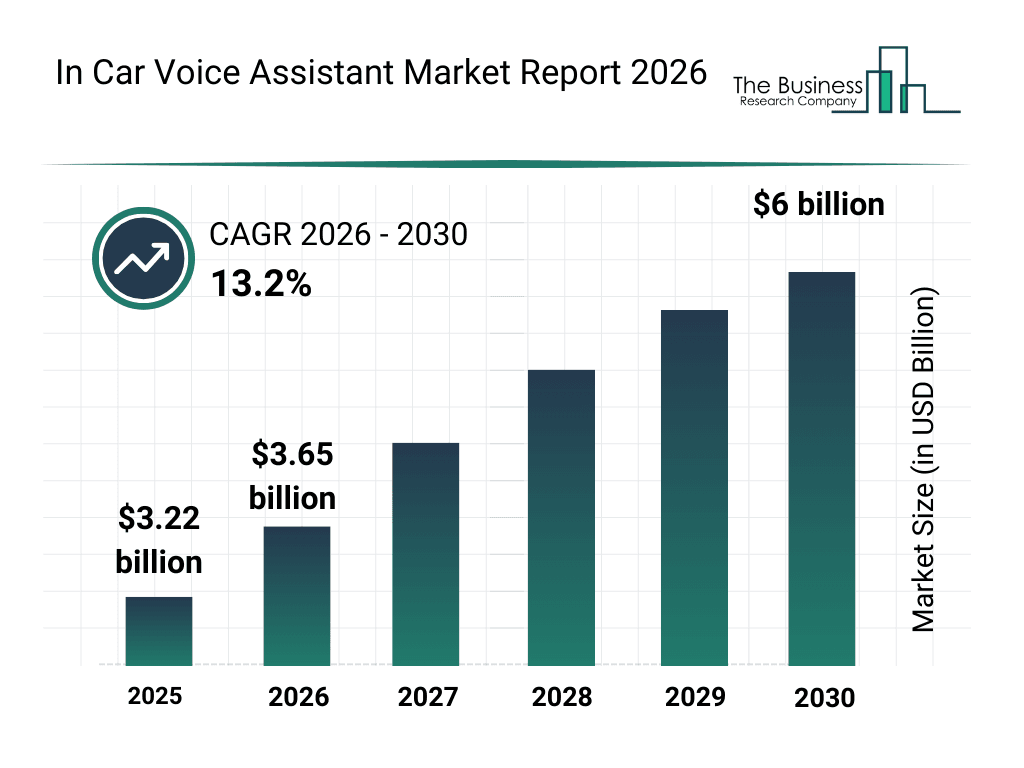
Car Voice Assistant Market Size And Share 2026
Source: The Business Research Company
- Voice is increasingly the default for navigation, calls, and “find X nearby.”
- The in-car voice assistant market was $3.65B in 2026 (per The Business Research Company).
- North America was the largest region in 2025.
- Expected to grow to $6 billion in 2030 at a compound annual growth rate (CAGR) of 13.2%.
- Best wins: location pages, “open now,” driving directions, schema, and clean NAP.
3) Smart speakers (household utility)
- Approximately 35% of users leverage voice search on smart speakers
- 86 million people use smart speakers monthly in the United States.
- Best wins: concise answers, branded queries, basic how-to steps.
4) TVs and smart home devices (assistants everywhere)
- Often, content discovery or control is not classic web search.
- Approximately 12% to 36% interact with voice-enabled TVs and home appliances.
- In the U.S., 62% of smart TV owners use voice remotes.
If you want a clean “voice SEO KPI,” track (a) featured snippets won, (b) local pack visibility, (c) branded query growth, and (d) GBP actions.
4: Top 5 countries (where mobile voice use is strongest)
GlobalWebIndex’s cross-market data (internet users 16–64) shows the highest mobile voice usage in the past month in these markets:
Important nuance: this is “voice commands/search on mobile in the past month,” and it’s from GWI’s wave used in that report, not a brand new 2026 survey. Still, it’s very actionable for market prioritization because it highlights where voice behavior is naturally high.
5: Top 5 languages (best proxy for voice search reach)
There’s no single public source that ranks “voice search volume by language” globally in 2026. The best practical proxy is most spoken languages, because assistants, phones, and search behavior follow where people are.
Top languages by total speakers (recent rankings vary slightly by source):
- English
- Mandarin Chinese
- Hindi
- Spanish
- French (often #5 in widely cited lists; some rankings swap Arabic/French depending on methodology)
How to use this: if you’re building content that needs to win voice in multiple markets, prioritize English + Hindi + Spanish first unless your business is China-heavy.
6: Gender segmentation (what we can responsibly say)
GlobalWebIndex’s report states: “By gender, figures remain fairly even” for mobile voice users.
- Data indicates that approximately 66% of male smartphone users interact with voice-enabled technology at least once a month.
- Roughly 55% of female smartphone owners have used voice assistants, with weekly usage rates around 28%.
A 2025 study on voice assistant usage (privacy/trust context) reported no statistically significant difference in usage between male and female students in their sample.
So the clean takeaway: don’t build a voice SEO strategy around gender assumptions. Segment by intent and device context instead.
7: Different age groups using voice searches from different devices
A quote prediction for 2026 (usable in your article)
By the end of 2026, voice-driven discovery will be judged less by how often people speak to devices and more by how often voice becomes the default input layer inside phones, cars, and AI assistants. The winners will be brands that can answer fast, locally, and in one clear sentence.
That prediction is consistent with mobile being the primary voice channel and with assistants spreading into more surfaces than “smart speakers.”
How to make decisions using these stats (a simple framework)?
Step 1: Decide if voice matters for your category
Voice SEO is the highest ROI when your customers ask:
- near me, open now, best in city
- how to, cost, compare, is it worth it
- quick facts and definitions
- navigational brand queries
If your business is mostly enterprise procurement with long research cycles, voice matters less directly, but it still affects brand demand and local trust signals.
Step 2: Pick your “voice surfaces”
Use this rule:
- Local service or retail: prioritize mobile + Maps + GBP
- Multi-location brands: prioritize local pages + entity consistency
- Media/education: prioritize featured snippets + concise answers
- Apps or SaaS: prioritize problem queries + comparisons + how to
Step 3: Build content in “voice format”
Based on what ranks in voice style answers:
- Put a one-sentence answer under each key question (aim ~25–35 words)
- Add supporting bullets, then a deeper section
- Implement the FAQ Page with schema where it genuinely fits
- Make pages fast (Core Web Vitals plus real-world load time mindset)
Step 4: Measure what voice actually changes
Most analytics won’t label a query as “voice.” So measure outcomes, voice influences:
- Featured snippet wins for question queries
- Local pack visibility and GBP actions
- Branded searches over time
- Calls, direction requests, and form fills from local pages