How to Audit and Clean Up Bad Citations (Step-by-Step)?
Bad citations are rarely the only reason a business struggles in local search, but they can quietly cap performance. In the latest local ranking-factor breakdown published by BrightLocal, citation signals still account for about 6% of Local Pack rankings and 7% of local organic rankings, meaning they’re not the biggest lever, but they’re not optional either.
The bigger issue is customer confidence. BrightLocal’s consumer research found 62% of consumers would avoid a business if they encountered incorrect information online.
If your citations are messy, you’re not just confusing algorithms; you’re burning demand you already earned.
This guide walks through how to find bad citations, audit them systematically, and clean them up without wasting weeks chasing low-impact fixes.
What Are Citations and Why Do They Matter for Local SEO?
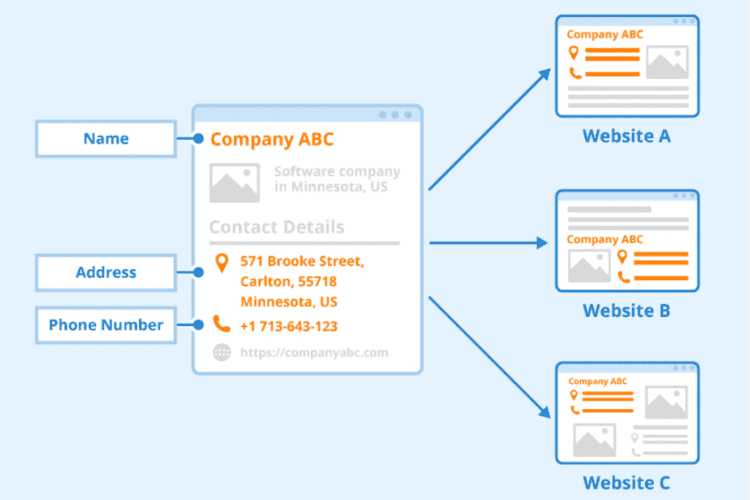
A local citation is any mention of your business identity online, typically your name, address, and phone number. Citations can be structured (directory listings) or unstructured (mentions on other sites).
They still matter because they influence both visibility and verification. BrightLocal notes citations remain a meaningful ranking signal, and their ranking-factor summary keeps citation signals steady in importance within the overall mix.
They also matter because directories dominate a lot of local-intent SERPs.
BrightLocal’s Business Listing Visibility Study (reported in their citations guide) found business directories make up 31% of local-intent organic results overall, so being accurate on the platforms that rank is a direct distribution play, not just an algorithm play.
The Role of NAP Consistency in Citations
NAP consistency is the cleanest way to help search engines, and people reconcile that all these mentions refer to the same real-world business.
When NAP breaks, trust drops fast. BrightLocal’s Local Citations Trust Report found 80% of consumers lose trust in local businesses when they see incorrect or inconsistent contact details.
It also found 22% of consumers reported visiting the wrong location due to incorrect address information online.
On the algorithm side, BrightLocal’s ranking-factor writeup lists HTML NAP matching the business profile NAP among notable local organic ranking factors, reinforcing that consistency between your site and your profiles still matters.
How Bad Citations Hurt Rankings and Trust?
Bad citations don’t just reduce “authority.” They create friction at the exact moment customers act.
Google’s own guidance on Maps and Business Profiles notes that Google delivers hundreds of millions of calls every month and “billions of local searches” and emphasizes that incomplete or inaccurate profiles can mean missing customers.
BrightLocal’s Local Citations Trust Report found 71% of consumers had a negative experience because of incorrect local business information, and 93% said they’re frustrated by incorrect information in online directories. That is the real cost: missed calls, wrong turns, and lost confidence.
How to Identify Bad Citations?
You’re looking for any listing that undermines reality: wrong NAP, wrong business profile category, duplicates, outdated hours, or merged profiles that shouldn’t be merged.
The reason this is urgent is simple: consumers punish inaccuracies. BrightLocal’s 2023 discovery and trust research found 62% of consumers would avoid using a business after finding incorrect information online.
Your job in identification is not to find every mention on the internet. It’s to find the mentions that customers and search engines actually use, and then clear the inconsistencies that create doubt.
Common Signs of Bad or Inconsistent Citations
Wrong phone number (old line, tracking number used inconsistently), small name changes (LLC vs no LLC), address formatting changes that alter geocoding, outdated hours, and category mismatches that change relevance.
Duplicate listings are especially common after moves, rebrands, practitioner changes, or data-aggregator pushes. BrightLocal’s trust research shows incorrect hours alone damage trust for 51% of consumers, and incorrect or inconsistent business names/contact details drive broad trust loss.
Also watch for customer-facing fallout. BrightLocal found 22% of consumers reported visiting the wrong location because the address online was wrong. If you see reviews mentioning “you moved” or “wrong address,” treat that as a citation-cleanup alert.
Start with tools when the scale is large, and use manual checks to validate the highest-impact listings.
BrightLocal’s citation tooling is built around finding NAP errors and duplicates, and their expert survey notes tool coverage across a network of 1,400+ citation sites.
Whitespark’s citation tool emphasizes broad discovery beyond fixed directory lists, runs campaigns weekly (free campaigns monthly), and is available in 43 countries, which is useful when you need true web-wide discovery plus competitor-driven opportunities.
For Moz Local, a practical way to think about it is distribution plus syncing. One implementation breakdown notes Moz Local distributes listing data to 43 citation sites and aggregators, which can help for baseline coverage, though partner lists can vary over time.
Manual search operators still work because Google remains dominant: BrightLocal found Google accounts for 70% of general online searches (Google plus Safari defaulting to Google). That makes search operators a reliable backstop for spotting obvious mismatches.
Step-by-Step Guide to Auditing Local Citations
A local citation audit is just a controlled comparison: one source of truth vs every important listing.
Do it in a repeatable order: define your canonical NAP, collect listings, classify problems, then queue fixes by impact. The goal is fewer contradictions across the ecosystem, not “more citations.”
This matters because citations influence visibility and trust. BrightLocal’s ranking-factor analysis still assigns citations 6% of Local Pack importance and 7% of local organic importance, and in competitive markets, small deltas add up.
Create a Master NAP Record
Create a single canonical record that every listing must match. Include official business name, primary phone, full address, suite formatting, hours, URL, and category choices.
This is not busywork. BrightLocal’s consumer research found 85% of consumers consider contact information and opening hours important when researching local businesses. If you don’t standardize these fields internally, you will drift externally.
Also set rules for tracking numbers. If you use call tracking, define where it’s allowed (often ads and landing pages) and where it’s not (core citations), because inconsistent phone data is a major trust killer.
BrightLocal’s citations trust research found 80% lose trust after seeing incorrect or inconsistent contact details.
Export or Collect All Existing Listings
Pull listings from your tools first, then fill gaps manually. Your minimum set should include major maps, major directories, key vertical sites, and any listings that rank for your brand name.
Directories are not fringe. BrightLocal reports directories make up 31% of local-intent organic results overall, so your audit should start where customers actually land.
Also factor in AI discovery. BrightLocal’s AI source study found that directory listings are widely used as sources across major AI search experiences, and that Yelp appeared as a source in 33% of their test searches. That makes citation accuracy increasingly relevant beyond classic SEO.
Compare for Errors, Duplicates, and Inconsistencies
Now compare every listing against the master record and tag each issue:
Incorrect NAP, incomplete profile (missing hours, missing URL), duplicate profile, merged profile, or wrong category.
Treat duplicates as high priority because they cause both algorithmic and customer confusion. BrightLocal’s trust report found 22% of consumers visited the wrong location due to incorrect online address data, which can be caused or amplified by duplicates and outdated listings.
Also flag website-to-profile mismatches. BrightLocal’s ranking-factor summary explicitly references HTML NAP, matching the profile NAP as a notable factor, so your website should never contradict your most authoritative listing.
How to Clean Up Bad Citations?
Cleanup is about impact sequencing. Fix the sources that influence customers and the broader ecosystem first, then move outward.
Remember the baseline: BrightLocal’s consumer trust research shows 62% of consumers would avoid a business after finding incorrect info. Cleanup work pays off because it removes friction that kills conversions, not because it “adds SEO points.”
Also, be realistic. Citation signals are one slice of local rankings, but they are steady and foundational. BrightLocal’s ranking-factor breakdown keeps citations in the mix at 6–7% depending on surface area.
Prioritize High-Authority Directories
Start with the platforms customers actually use and the ones Google’s ecosystem tends to surface.
BrightLocal shows business directories represent 31% of local-intent organic results, so fixing the listings that rank is often a higher ROI than cleaning obscure sites first.
Also prioritize high-visibility AI sources. BrightLocal’s AI listings study found that Yelp appeared in 33% of their AI search tests, and directories were used across every industry they tested.
Even if you are not chasing AI traffic directly, these systems increasingly shape customer discovery.
Include maps and aggregators early. Data providers like Data Axle can distribute business information to partners, and their own platform describes distribution across major search engines, directories, navigation systems, and more.
Claim and Update Listings (When You Control Them)
If you can claim a profile, claim it. Ownership makes cleanup faster and prevents reversion.
Then fully complete the listing: correct NAP, categories, hours, URL, and media.
Google’s own Business Profile guidance notes that businesses with images get 42% more requests for directions, and that Google serves “billions” of local searches monthly. Better listings turn into real actions.
Don’t treat this as cosmetic. BrightLocal research shows 85% of consumers care about the presence of contact info and hours when researching local businesses, so completing these fields directly supports conversion.
If you have multiple locations, enforce per-location NAP records and avoid “shared” phone numbers unless the business model truly requires it.
Request Edits or Removal (When You Don’t)
When you can’t claim a listing, you’ll typically need to request edits, report duplicates, or pursue removal through the platform’s support process.
This can feel slow, but the cost of leaving bad data is measurable. BrightLocal’s Local Citations Trust Report found 71% of consumers had a negative experience due to incorrect information, and 93% are frustrated by wrong directory data. Those are strong reasons to keep pushing fixes through to completion.
If you’re dealing with a move, prioritize “old address” listings. BrightLocal’s 2023 trust research shows 62% of consumers would avoid a business after seeing incorrect information, and stale addresses are one of the most damaging inaccuracies.
Dealing With Duplicate Listings
Duplicate listings split signals, confuse customers, and often cause the platform to distrust the entity. They’re a common root cause behind ranking volatility and wrong customer actions.
Treat duplicates like an incident response: identify the “correct” listing, claim it, merge or remove the rest, and then confirm the fix propagated.
A real example of cleanup impact: Kumon worked across 650 locations and implemented a centralized cleanup and citation strategy. The published results included a 63% increase in Position 1 rankings, driven by cleaning incorrect listings and building/updating key citations consistently across locations.
That’s not magic. It’s what happens when you remove contradictions at scale and make it easy for search engines and parents to connect the dots.
Best Practices to Keep Citations Clean Moving Forward
After cleanup, the only durable strategy is monitoring plus process. Listings drift over time because directories refresh data, users suggest edits, and aggregators redistribute old records.
This matters more now because discovery happens across more surfaces. BrightLocal found 40% of consumers say they actively use generative AI within search, so your business identity needs to stay consistent across the broader ecosystem, feeding those answers.
Use a Citation Tracker or Monitor
Monitoring prevents relapse. Whitespark reruns campaigns weekly (free campaigns monthly), which is useful for catching new mentions, new duplicates, and competitor-driven opportunities without constant manual work.
BrightLocal’s tooling is designed to surface NAP errors and duplicates, and their citation survey emphasizes that 90% of experts believe accurate citations are important for local search ranking. Tracking is how you keep accuracy from decaying.
If you manage multiple locations, monitoring becomes non-negotiable. The Kumon case illustrates why: when hundreds of locations exist, central control is the difference between repeatable accuracy and constant drift.
Maintain Consistency Across All Online Assets
Citations don’t live in a directory-only world. Customers use maps, social, and now AI-driven results.
BrightLocal’s consumer behavior study found maps products (including Google Maps and Apple Maps) and other map tools collectively make up 20% of default local search platforms, and 1 in 5 consumers conduct local searches directly within maps. If your NAP is inconsistent across these surfaces, customers will feel it immediately.
AI adds another layer: BrightLocal found directories are key sources across AI search tools, and Yelp shows up as a source in 33% of their tested searches. Consistency now supports both rankings and citations-as-data for AI answers.
Document Changes Internally
Most citation disasters start internally: someone changes the number, tweaks the name, adds a suite, or updates hours in one place and forgets the rest.
Document every change with a date, reason, and rollout checklist. This is justified by volume: BrightLocal found 58% of consumers search for something online several times a day, and 82% search at least daily. In a world where customers search constantly, inconsistencies get noticed fast.
Also, document what “allowed variation” means for your brand (street vs st, suite formatting, tracking number usage), then enforce it via SOP so new listings and updates don’t reintroduce drift.
Conclusion: Clean Citations = Stronger Local SEO
Citation cleanup is not glamorous, and it’s rarely instant. But it’s one of the most reliable foundational wins in local SEO because it removes contradictions that block trust.
The numbers make the case: citation signals still sit around 6% of Local Pack and 7% of local organic ranking influence in BrightLocal’s breakdown, so they remain part of the ranking equation.
More importantly, customers punish inaccuracy. BrightLocal found 62% of consumers would avoid a business after finding incorrect info online, and 80% lose trust when contact details are inconsistent.